Consulting Services
- Process Performance improvement
- Yield, conversion, Productivity, Utility Consumption
- New Equipment Design
- Debottleneck Equipment Performance

Services
One configurable engine for your process data, and the engineering services built on top of it.
What we do
Platform
Variable names, units, batch definitions and model choices are configured per industry, so the same workflow serves fermentation, chemicals and other batch or continuous processes.
Ferment IQ
Ferment IQ runs inside your plant network and turns live process data into a clear operational picture: where every batch is, which variables are moving, and which batches need attention now.
Every active batch with its phase, elapsed time and key variables, laid out the way your shift team reads a plant.
Compare live trajectories against reference behaviour so drifting batches surface before they become lost batches.
Deployed inside the plant network, next to your data. Operational data stays where it belongs.
Service
Process control is a vital aspect of industrial operations that involves the use of technology to monitor and regulate various processes within chemical industries. It ensures that manufacturing processes operate efficiently, consistently, and safely by maintaining the desired output within specific limits. Whether it's controlling temperature, pressure, flow rates, or chemical composition, process control systems enable industries to produce high-quality products while minimizing waste and energy consumption.
An early use of feedback control for manufacturing purposes was by Watt to regulate steam turbines in the late 18th century, followed by servomechanisms for ship steering in the 1920s.
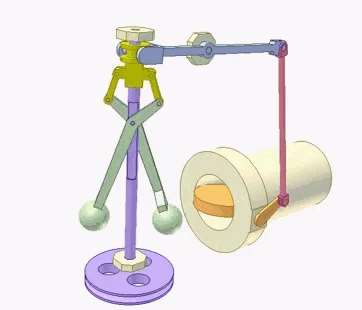
In the chemical industry, precise control over processes is crucial for several reasons:
At RPDS, our capabilities in process control are rooted in a deep understanding of both classical and modern control strategies. We excel in implementing advanced process control systems that enhance efficiency, stability, and safety across various industries. Our expertise includes real-time monitoring, process simulation, and control loop optimization, ensuring your operations run smoothly and respond dynamically to changing conditions. By leveraging cutting-edge technologies and data-driven insights, we provide customized solutions that drive performance and reliability in every aspect of your process control systems.
Create accurate models of your processes to predict outcomes and improve control strategies, using different modeling approaches such as first-principles and data-based models.
Fine-tune PID controllers, both model-based and online, and optimize control loops for enhanced process stability.
Apply dynamic process models to predict future behavior and optimize control actions, improving efficiency and handling complex systems with multiple variables and constraints.
Service
In process industries, the variables that determine profitability are often the most difficult to measure continuously. Product composition, reaction conversion, biomass concentration, moisture content, and quality indices typically depend on laboratory analysis or expensive online analyzers that introduce cost, maintenance burden, and delayed feedback.
A soft sensor, also known as a virtual sensor or inferential model, addresses this limitation by estimating an unmeasured process variable using existing plant measurements and process relationships.
Using inputs such as temperatures, pressures, flow rates, compositions, and historical operating data, soft sensors generate real-time estimates of critical quality variables directly within plant operations.
Rather than replacing instrumentation, soft sensors extend measurement capability beyond physical sensing limits.
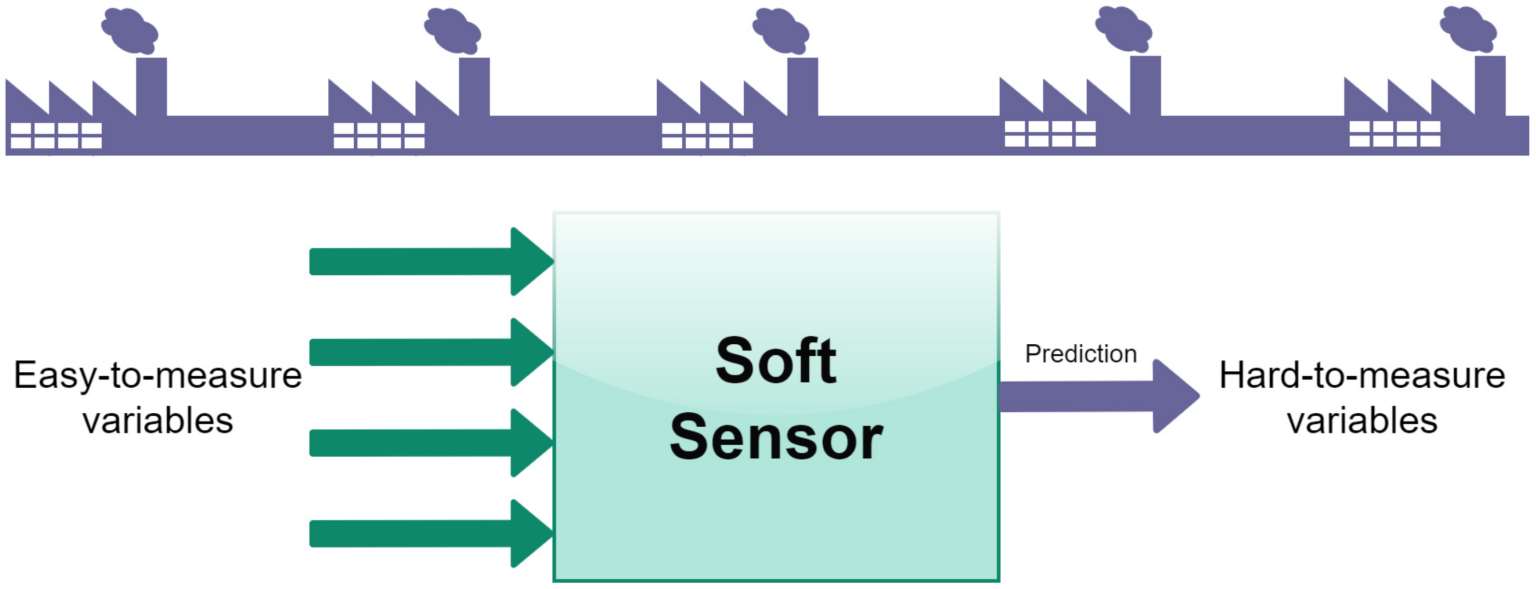
Soft sensors are deployed where conventional measurement falls short. Variables such as product composition, conversion, biomass concentration, and quality indices are often difficult or expensive to measure continuously. Soft sensors bridge this gap by converting readily available process data into real-time estimates, enabling improved control, reduced variability, and enhanced operational efficiency.
Typical applications include:
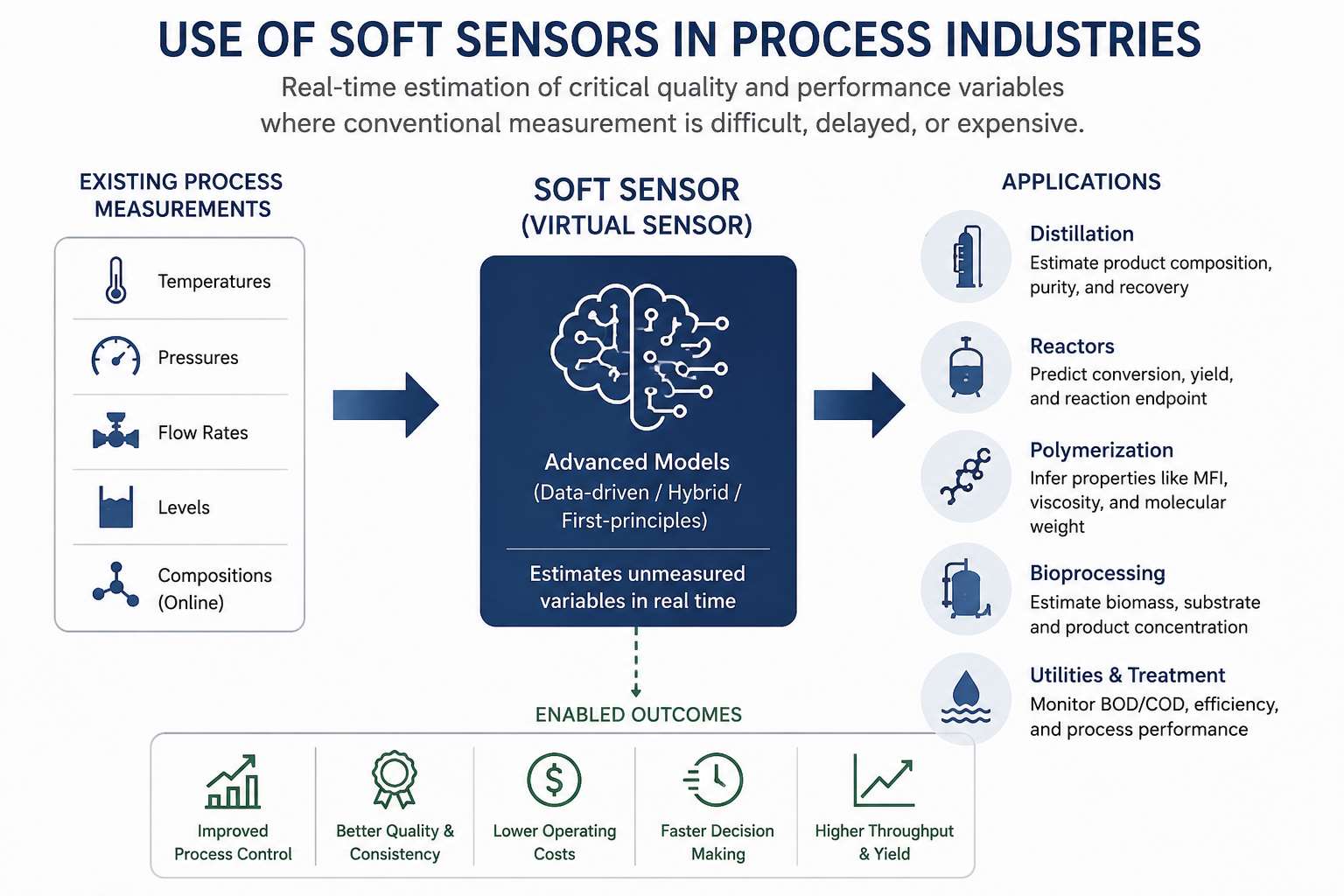
Soft sensors are increasingly integrated into APC, MPC, and real-time optimization environments to improve control performance and reduce process variability.
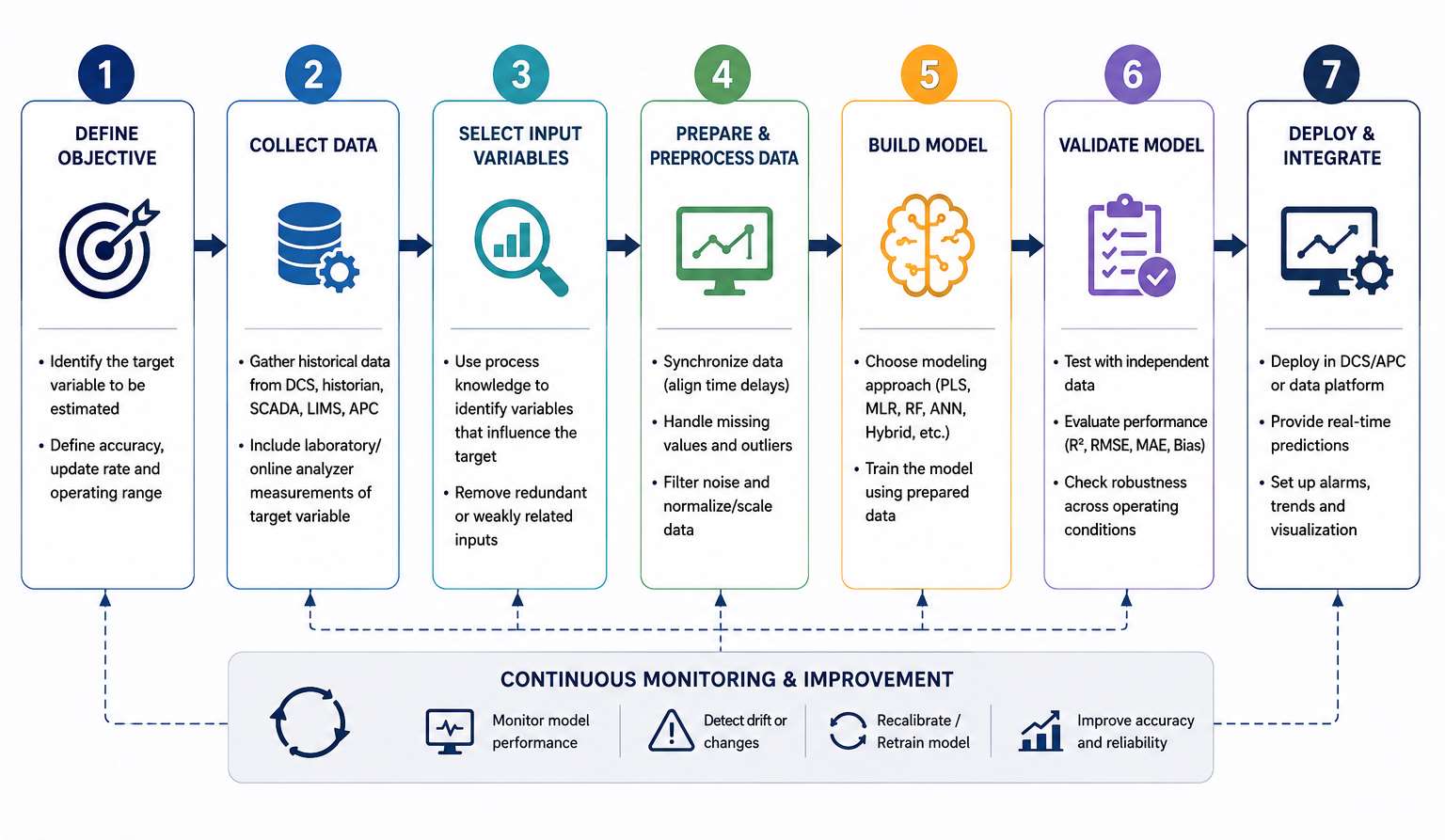
Developing an industrial soft sensor requires a structured engineering workflow:
Soft sensors deliver value across operational and economic dimensions:
Developing soft sensors for industrial processes traditionally requires a combination of process expertise, data science knowledge, and significant development effort. RPDS AI simplifies this process by providing a guided, no-code workflow that enables process engineers and domain experts to build soft sensor models using existing plant data.
Users can upload historical process data, explore and visualize operating conditions, perform data preprocessing, identify key process variables, and develop predictive models through an intuitive interface. The platform streamlines the model development workflow, reducing the complexity typically associated with machine learning projects.
Whether estimating product quality, reaction conversion, biomass concentration, moisture content, yield, or other difficult-to-measure process variables, RPDS AI helps organizations transform plant data into actionable process intelligence.
By reducing dependence on specialized programming skills and accelerating model development, RPDS AI enables chemical, pharmaceutical, biotech, food processing, and manufacturing companies to unlock greater value from their operational data and support data-driven process improvement initiatives.
Service
The history of predictive maintenance in the chemical industry reflects the evolution of technology and data analytics. Traditionally, maintenance in industrial settings, including chemical plants, followed a reactive or preventive model. Equipment was either repaired after a failure occurred or maintained on a fixed schedule, regardless of its actual condition. This approach often led to unnecessary downtime, increased costs, and suboptimal asset performance.
The advent of computing power and data storage in the late 20th century paved the way for predictive maintenance. Initially, simple rule-based systems were used to monitor equipment conditions and trigger alerts when predefined thresholds were crossed. With the rise of artificial intelligence and machine learning in the 21st century, predictive maintenance truly came into its own: advanced algorithms could now analyze vast datasets, identifying complex patterns and correlations beyond the reach of traditional methods.
In the chemical industry, this progression has led to AI-driven predictive maintenance systems. These systems use historical data, sensor inputs, and real-time analytics to predict equipment failures and maintenance needs with a high degree of accuracy, and they keep improving as the models are refined.
Algorithm development starts with data that describes your system in a range of healthy and faulty conditions. The raw data is preprocessed into a form from which you can extract condition indicators: features that help distinguish healthy conditions from faulty ones. You can then use the extracted features to train a machine learning model that can:
Finally, you deploy the algorithm and integrate it into your systems for machine monitoring and maintenance.
Service
AI expedites bottleneck identification through data analysis, enhancing process efficiency.
Try it yourself
Open the RPDS Tool on the penicillin dataset and run the cleaning, soft-sensor and golden-batch steps yourself.